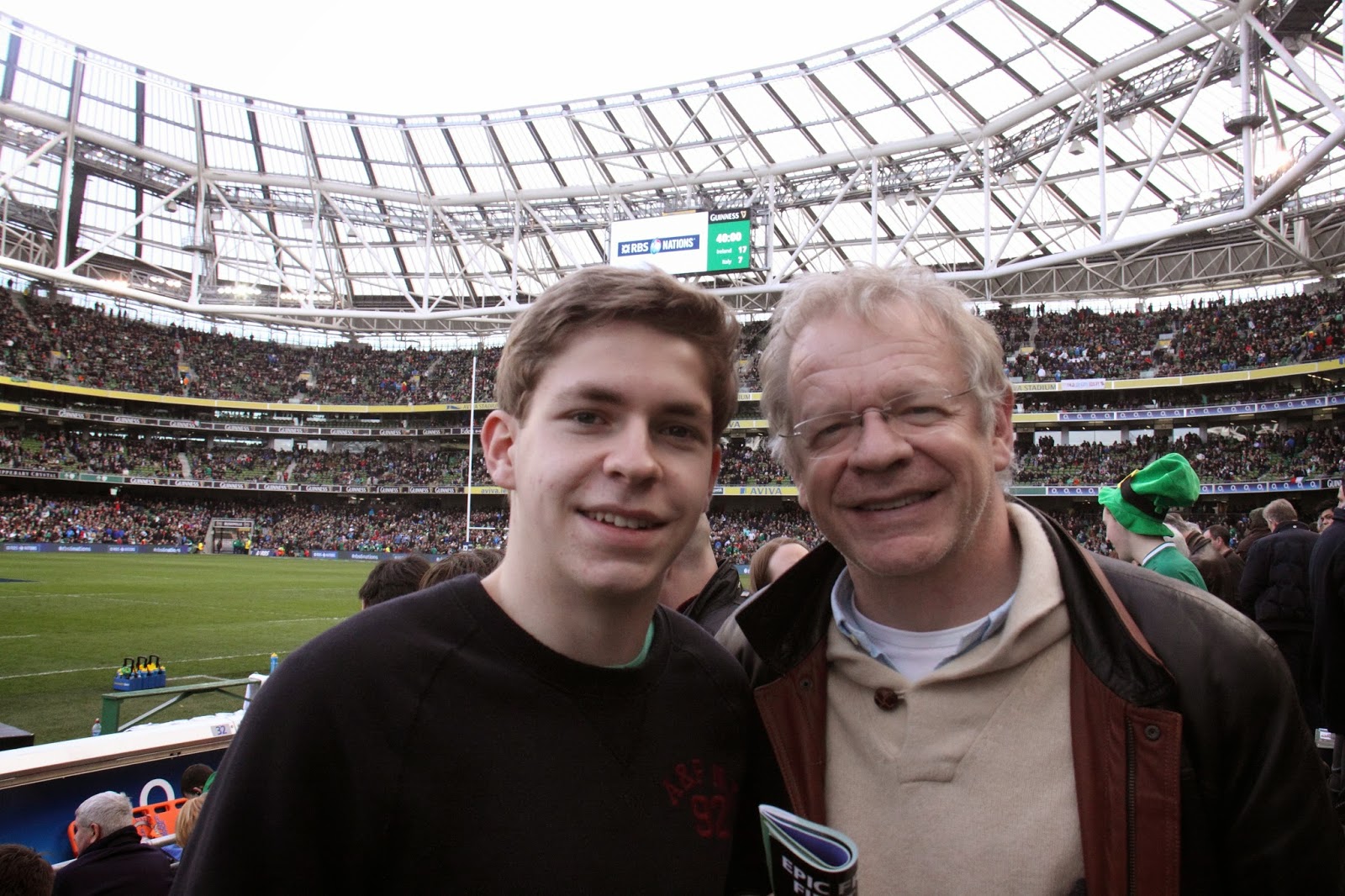
Poor old Aaron thought he was going to Stoke......
Tuesday, February 3, 2015
Born on the 7th of November
As a kid I was always interested to learn of any celebrities who shared a birthday with me. How I did this in those pre-internet days now intrigues me, but I can remember being particularly delighted to learn that I shared the same birthday as Luigi Riva the Cagliari and Italian goalscorer, who graced the Mexico World Cup, one which I followed avidly.
I since have learned that also born on that date was the philosopher Albert Camus, and while at that time Riva brought far more kudos, I now have a more profound appreciation of the relative merits of my two fellow-Scorpios and derive a far stronger pleasure in knowing that for a short two years (1957 -1959) I blew the candles out on the birthday cake at the same time as the bold Albert himself. After all, what did Luigi Riva ever give us aside from 170 goals in Seria A and a still-standing record 35 goals for his home country?
As a nice aside, contrast Riva’s tally of 35 goals for the powerful Azzuri against Robbie Keane’s total of 65 for Ireland and you begin to appreciate how good the man from Crumlin was; or alternatively how defensive Italian teams are.
Returning to the thrust of this article we need to look again at Algerian Camus, winner of the Nobel Peace Prize in 1957, who died three years later in a car crash at the age of 46 – hence our limited number of shared birthdays. Camus’ love of football is well known, right down to the commercialisation of one of his probably least important quotes –
“Everything I most certainly know about morality and the obligations of men, I owe it to football”.
Camus was an extremely competent goalkeeper, playing in his early years with Racing Universitaire Algerios. While being a superbly romantic notion, the reports of him playing, or going very close to playing in the inaugural World Cup in Uruguay in 1930 cannot be substantiated to any reasonable extent – Algeria did not gain independence for a further 32 years; the French squad for the event contained no “expatriate” players; and he would have been only 17 at the time. Regardless of this fanciful diversion, the fact remains that a potentially successful footballing career was cut short a year later when Camus contracted tuberculosis and was forced to discontinue playing.
An amount of Camus’ philosophical thinking was motivated by two fundamental issues – politically, the treatment by France of the “Pieds-Noir” of Algeria and philosophically, man’s constant search for the meaning of life.
Camus was born in 1913 and before his first birthday, he lost his father fighting for France in the Great War. His parents were members of the Pied-Noir community, the name given to French settlers in North Africa from 1830 to the 1960s. The Pieds-Noir considered themselves as French, but gradually over time, were ostracized and discriminated against by the French Government – both while Algeria was a French colony and post-independence, when many sought to return to their original homeland.
Many of the pied-noir were aggrieved by their treatment by the French Governments of that period, having been deemed eligible enough to die for their country in two World Wars yet not eligible enough to be allowed to return there to live. A great movie which portrays the discriminatory treatment of North African soldiers serving in the Free French Forces during the Second World War in entitled “Days of Glory” and is well worth a watch. While this particular representation of the plight of the Pied-Noir has its’ foundations in the poetic licence and brightly-lit romanticism of the movie industry, one doesn’t have to look too far into modern-day politics to see further examples of the follies of French colonial policies. France has a troubled legacy from their relationship with many of their African colonies. The Charlie Hebdo assassins were disillusioned French North Africans, motivated by religious frenzy as well as perceived social injustice, while the potential for race riots, centred around the Arab emigrant population in France, never seems too far away.
Even in football, cause for debate is rife. In more recent times, highly talented players of Algerian extraction were welcomed into the French national team under dual citizenship rules. Zidane is the most famous. In a similar manner to Ireland working the dual citizenship rules to take a few gems away from England, France has done the reverse in recent times - snapping up the more talented Algerian players to the detriment of the Algerian team who worked with those who failed to make the grade in France. Algerian independence came in 1962, so any player whose parents were born before that date can play for either country.
While Camus was a powerful political activist, it is however with his literary output that he achieved most notoriety. Much of his literary and philosophical thinking debated the concept of the individual, the theory of collective responsibility and the absurdity of man’s search for the meaning of life.
Through his life Camus had a strong faith in the values of camaraderie, morality, and fair-play, all of which he believed existed in the game of football. Many recent commentators have noted how appalled he would be by the antics of the current batch of professionals and the game’s governing organisation. The football pitch, where players are equal, irrespective of social class or racial background, and where honest collective endeavor was rewarded, mapped neatly into the type of society that he believed in. Even today, there is no sport that can compete with football in terms of its’ common appeal, removed from any form of elitism.
If you search for simple and concise evidence of Camus’ genius look not for t-shirts worn by football fans trying to intellectualise their game; look not in his literary works; but rather read his acceptance speech for his Nobel Peace Prize for Literature. It makes both prophetic and chilling reading and begs the question as to what we have done with his and that generation’s legacy – are we in any better position now than we were when he delivered the speech back in 1957 (coincidentally my birth year)?
Born on the 7th of November.
Nobel Prize acceptance speech
Each generation doubtless feels called upon to reform the world. Mine knows that it will not reform it, but its task is perhaps even greater. It consists in preventing the world from destroying itself. Heir to a corrupt history, in which are mingled fallen revolutions, technology gone mad, dead gods, and worn-out ideologies, where mediocre powers can destroy all yet no longer know how to convince, where intelligence has debased itself to become the servant of hatred and oppression, this generation starting from its own negations has had to re-establish, both within and without, a little of that which constitutes the dignity of life and death. In a world threatened by disintegration, in which our grand inquisitors run the risk of establishing forever the kingdom of death, it knows that it should, in an insane race against the clock, restore among the nations a peace that is not servitude, reconcile anew labour and culture, and remake with all men the Ark of the Covenant. It is not certain that this generation will ever be able to accomplish this immense task, but already it is rising everywhere in the world to the double challenge of truth and liberty and, if necessary, knows how to die for it without hate. Wherever it is found, it deserves to be saluted and encouraged, particularly where it is sacrificing itself. In any event, certain of your complete approval, it is to this generation that I should like to pass on the honour that you have just given me.
Footnote
Per wikipedia:
In 1901 the word indicated a sailor working barefoot in the coal room of a ship, who would find his feet dirtied by the soot and dust. In the Mediterranean, this was often an Algerian native, thus the term was used pejoratively for Algerians until 1955 when it first began referring to "French born in Algeria." This usage originated from mainland French as a negative nickname.
I since have learned that also born on that date was the philosopher Albert Camus, and while at that time Riva brought far more kudos, I now have a more profound appreciation of the relative merits of my two fellow-Scorpios and derive a far stronger pleasure in knowing that for a short two years (1957 -1959) I blew the candles out on the birthday cake at the same time as the bold Albert himself. After all, what did Luigi Riva ever give us aside from 170 goals in Seria A and a still-standing record 35 goals for his home country?
As a nice aside, contrast Riva’s tally of 35 goals for the powerful Azzuri against Robbie Keane’s total of 65 for Ireland and you begin to appreciate how good the man from Crumlin was; or alternatively how defensive Italian teams are.
Returning to the thrust of this article we need to look again at Algerian Camus, winner of the Nobel Peace Prize in 1957, who died three years later in a car crash at the age of 46 – hence our limited number of shared birthdays. Camus’ love of football is well known, right down to the commercialisation of one of his probably least important quotes –
“Everything I most certainly know about morality and the obligations of men, I owe it to football”.
Camus was an extremely competent goalkeeper, playing in his early years with Racing Universitaire Algerios. While being a superbly romantic notion, the reports of him playing, or going very close to playing in the inaugural World Cup in Uruguay in 1930 cannot be substantiated to any reasonable extent – Algeria did not gain independence for a further 32 years; the French squad for the event contained no “expatriate” players; and he would have been only 17 at the time. Regardless of this fanciful diversion, the fact remains that a potentially successful footballing career was cut short a year later when Camus contracted tuberculosis and was forced to discontinue playing.
An amount of Camus’ philosophical thinking was motivated by two fundamental issues – politically, the treatment by France of the “Pieds-Noir” of Algeria and philosophically, man’s constant search for the meaning of life.
Camus was born in 1913 and before his first birthday, he lost his father fighting for France in the Great War. His parents were members of the Pied-Noir community, the name given to French settlers in North Africa from 1830 to the 1960s. The Pieds-Noir considered themselves as French, but gradually over time, were ostracized and discriminated against by the French Government – both while Algeria was a French colony and post-independence, when many sought to return to their original homeland.
Many of the pied-noir were aggrieved by their treatment by the French Governments of that period, having been deemed eligible enough to die for their country in two World Wars yet not eligible enough to be allowed to return there to live. A great movie which portrays the discriminatory treatment of North African soldiers serving in the Free French Forces during the Second World War in entitled “Days of Glory” and is well worth a watch. While this particular representation of the plight of the Pied-Noir has its’ foundations in the poetic licence and brightly-lit romanticism of the movie industry, one doesn’t have to look too far into modern-day politics to see further examples of the follies of French colonial policies. France has a troubled legacy from their relationship with many of their African colonies. The Charlie Hebdo assassins were disillusioned French North Africans, motivated by religious frenzy as well as perceived social injustice, while the potential for race riots, centred around the Arab emigrant population in France, never seems too far away.
Even in football, cause for debate is rife. In more recent times, highly talented players of Algerian extraction were welcomed into the French national team under dual citizenship rules. Zidane is the most famous. In a similar manner to Ireland working the dual citizenship rules to take a few gems away from England, France has done the reverse in recent times - snapping up the more talented Algerian players to the detriment of the Algerian team who worked with those who failed to make the grade in France. Algerian independence came in 1962, so any player whose parents were born before that date can play for either country.
While Camus was a powerful political activist, it is however with his literary output that he achieved most notoriety. Much of his literary and philosophical thinking debated the concept of the individual, the theory of collective responsibility and the absurdity of man’s search for the meaning of life.
Through his life Camus had a strong faith in the values of camaraderie, morality, and fair-play, all of which he believed existed in the game of football. Many recent commentators have noted how appalled he would be by the antics of the current batch of professionals and the game’s governing organisation. The football pitch, where players are equal, irrespective of social class or racial background, and where honest collective endeavor was rewarded, mapped neatly into the type of society that he believed in. Even today, there is no sport that can compete with football in terms of its’ common appeal, removed from any form of elitism.
If you search for simple and concise evidence of Camus’ genius look not for t-shirts worn by football fans trying to intellectualise their game; look not in his literary works; but rather read his acceptance speech for his Nobel Peace Prize for Literature. It makes both prophetic and chilling reading and begs the question as to what we have done with his and that generation’s legacy – are we in any better position now than we were when he delivered the speech back in 1957 (coincidentally my birth year)?
Born on the 7th of November.
Nobel Prize acceptance speech
Each generation doubtless feels called upon to reform the world. Mine knows that it will not reform it, but its task is perhaps even greater. It consists in preventing the world from destroying itself. Heir to a corrupt history, in which are mingled fallen revolutions, technology gone mad, dead gods, and worn-out ideologies, where mediocre powers can destroy all yet no longer know how to convince, where intelligence has debased itself to become the servant of hatred and oppression, this generation starting from its own negations has had to re-establish, both within and without, a little of that which constitutes the dignity of life and death. In a world threatened by disintegration, in which our grand inquisitors run the risk of establishing forever the kingdom of death, it knows that it should, in an insane race against the clock, restore among the nations a peace that is not servitude, reconcile anew labour and culture, and remake with all men the Ark of the Covenant. It is not certain that this generation will ever be able to accomplish this immense task, but already it is rising everywhere in the world to the double challenge of truth and liberty and, if necessary, knows how to die for it without hate. Wherever it is found, it deserves to be saluted and encouraged, particularly where it is sacrificing itself. In any event, certain of your complete approval, it is to this generation that I should like to pass on the honour that you have just given me.
Footnote
Per wikipedia:
In 1901 the word indicated a sailor working barefoot in the coal room of a ship, who would find his feet dirtied by the soot and dust. In the Mediterranean, this was often an Algerian native, thus the term was used pejoratively for Algerians until 1955 when it first began referring to "French born in Algeria." This usage originated from mainland French as a negative nickname.
Wednesday, December 31, 2014
Wednesday, December 10, 2014
The New Leg - a short story by Brusselsbliue
Collski and his “new” mates are playing
indoor football on Thursday night when the door swings open and in strides this
tall figure sporting a newly acquired Spurs retro shirt and gleaming white
trainers. “So which one of you f**kers is going to pick me”.
They all stare
dumfounded.
The last they saw of this guy he needed a stroller to walk
around Stillorgan Shopping Centre. Nobody moves until Hobbles coughs and claims
he needs a rest and would be happy to sit on the bench. Yiddo goes up top calling
for the ball. It is played in to his feet. Collski tries in vain to go through the
back of him (his “special” as the big bully calls it). Yiddo swivels and
Bullock bursts in to tears as the ball hits the back of the
net. Without another word Yiddo turns his back on his erstwhile friends and
strides out the way he came in pausing at the door to glance back and saying
“It’s that time of the year my friends . The king is born – again”
Friday, December 5, 2014
From humble beginings
A review of
the Deloitte (my old stomping ground) report on the finances of the football
industry provides some interesting thought provokers.
The
underlying data is based primarily on the 2012/13 season.
Leeds’ predicament
The Championship play-off decider at Wembley
has been labelled the most financially critical game in soccer globally. The desire to get into the Premiership has
resulted in so many of the Championship clubs mismanaging their finances to
such an extent that the combined debt of all Championship clubs exceeds their
revenue by a factor of two. The
combined revenue of Championship clubs stood at £435million with debts of over
£1 billion.
The step into the Premiership brings among
other things a far more lucrative media rights pay-out. In the year under review, TV payouts in the
Premiership varied according to the profile of the club, with a high at £61
million to Man United and a low of £40 million to QPR. Contrast this lower figure with average total
revenues per club in the Championship of £19 million and you can begin to see
the importance of staying in the top flight.
In pursuit of this goal, Championship clubs
have substantially ignored financial discipline and only in season 2013/14 did
they collectively agree to introduce some form of governance in the form of
their equivalent of the European Fair Play Rules.
Poor old AVB
Much has been spoken about the brevity with
which some clubs hire and fire managers.
Spurs are probably the prime example of a club which places limited
store in longer term thinking and who do everything with this weeks’ results in
mind. Anyone who works for an American
company will recognise this type of policy.
Football clubs are not football clubs any
more. They are financial institutions
that have a large part of their revenue streams influenced by football
results. In the days of Lowry’s matchstick men, the
football club was there to bring identity and pride to the local community; it
now exists to deliver dividends and capital appreciation to shareholders. Managers are no longer judged on attributes
like loyalty, ethics, integrity and commitment (in addition to results) – think
Shankly, Nicholson, Catterick – they are judged on results alone, because
results generate revenues.
Clubs with benign or soft ownership structures
have an easy “financial pitch” on which to play – meeting the expectations of
Roman Abramovic or Sheikh Mansour from Abu Dhabi is a lot easier than meeting
the expectations of the institutional investors who assess investments based on
rates of return. The principal recipients of “soft” financing
(also generally interest free) in the Premiership were Chelsea, Newcastle,
Aston Villa and QPR who benefitted from 90% of the soft financing which itself
totalled £1.6 billion.
Total debt for all Premiership clubs totalled
£2.5 billion, and only two clubs had net assets – Swansea City and Norwich
City, notably two provincial, “family” clubs who must be viewed as temporary or
inconsistent members of the Premiership.
Show me the money
The total revenue for all Premiership clubs was
£2.5 billion – an average of £126 million with six clubs above the average and
fourteen below it. Man United again
weigh in on top with revenues of £353 million with the lowest being Wigan at
£58 million.
Wages are the principal cost with the combined
wages to revenue ratio standing at 71%.
Strangely QPR had the highest ratio in the Premiership at 129%, partly
explainable by a low revenue base.
Contrast the 71% with the comparative figure in the Championship of 106%
and you see further evidence of how messed up the Championship is.
Five clubs made
pre-tax losses in excess of £50ml –the principal loss-making entities were Liverpool,
Chelsea and Man City (not necessarily in
that order). Total losses in the Premiership
amounted to £316ml.
Qualification
for the Champions League is lucrative but possibly not as much as may be
thought. The four clubs which
participated in 2012/13 received Champions League payouts which averaged out at
£29 million, although to get a true measure of value one must add to this the additional
revenues for home Champions League fixtures.
In the Indian
Restaurant in Accrington
Brusselsblue passing himself off as a potential
purchaser of Stanley wasn’t by any means inconceivable. Half of the Premiership
clubs had foreign owners at the end of 2012/13.
While each deal had different valuation bases
attaching thereto, bringing them all back to multiples of turnover allows us to
crudely determine what the club might cost.
In the Premiership, Chelsea were sold in 2003 for a multiple of 1.2; Man
United in 2005 for 4.7; Newcastle in 2007 for 2.4 and Man City in 2008 for
2.6. Again the branded franchise and
value of Man United comes through.
In the lower divisions (where there is going to
be no “goodwill” or “Premiership” factor) it is more likely that the multiple
will be lower, or alternatively for debt-ridden clubs that the purchase price
will be £1 plus an assumption of the club’s debt. However for the sake of conjecture let’s put
that aside and work off a multiple of 1.2.
Total revenues in English football amounted to
£3.2 billion - £2.5 billion in the Premiership; $435 million in the
Championship and £200 million for Divisions 1 & 2. Spreading tis £200 million across the 48
clubs in these divisions equally would give individual turnover of £4.1 million
but more accurately the allocation should be weighted towards the teams in
Division 1. Refining the Accrington
Stanley turnover along these lines would give turnover of say, £2 million and
hence a valuation of £2.4 million.
Using venture capital provided by Investec of 75%,
Brusselsblue needs only find £600,000 himself – a drop in the ocean to a
European bureaucrat who has been tucking away schillings at the expense of the
Irish taxpayers for years.
Any hey presto, a Belgian owner for Stanley and
a pension income stream for the Stillorgan corner-boy – funded out of replica
shirt sales to “the Irish guys”.
Internationally the
Germans have it right
The Germans have an uncanny habit of winning
the World and European Championships.
Based on technically superiority we might think. Yes, this is undoubtedly a contributory
factor but what it probably overlooked is that the Bundesliga is arguably one
of the best administered and financially sound leagues in Europe.
Its’ revenue surprisingly surpasses La Liga and
it is second only to the Premiership with turnover of €2 billion (Premiership
€2.9 billion). Along with the
Premiership it makes an operating profit - €264 million; Premiership €90 ml –
operating profit being defined as results before losses on player purchases
transfers. The latter item turns the
Premiership operating profit of €90 million into a total loss of €380 million.
Wage control is prudently managed in the
Bundesliga and with a wage to revenue ratio of 51%. Unlike the Premiership, broadcast revenue is
not the largest single source of revenue.
Another feature of most Bundesliga clubs is
that they are fan-owned via the” Verein” system which dictates that each must
apply the “50 plus 1” ownership structure i.e. no majority shareholder. If applied correctly, the fans retain
control. While this may limit
investment, it certainly ensures that the League effectively is run by persons
more interested in football than in financial return.
Interestingly the
prime example of where this system has been manipulated is Hoffenheim, who
assisted by an injection of more than €250 million from an ex-player, achieved
promotion from non-league to the senior leagues and then the Bundesliga in
2008, where they finished runner-up. This meteoric rise was accompanied by a
popularity in Germany similar to that afforded to Chelsea and Manchester City
in the UK, i.e. nil outside their own fan base.
Aside from this example, the Bundesliga appears to maintain as many of the facets of a football league as opposed to a
share price index, than any other league in Europe. Hard to prove or dis-prove but could this
explain in any way why the German national team continues to throve while
England, drawing from the Premiership (where reverse principles appear to
apply) have deteriorated rapidly in recent years. Interesting thought.
Thursday, November 27, 2014
The other Arthur from Dublin
Mad Mary wasn't the only character to grace the centre of Dublin as we were growing up.
http://churchdoorandback.blogspot.co.uk/2011/11/we-never-had-it-so-good.html
We also had Arthur Fields who graced O'Connell Street and particularly "Carlisle Bridge" from 1930 to 1985 taking and selling Polaroid photos of the passers-by. The photos were developed by in a nearby studio by his wife and it is estimated that he took 182,000 over the course of his photographic career.
These photos have now become a cultural and historical treasure chest recording as they did Dublin life in its' simplest form over a period of 50 years.
An online archive is now being established of the photographs taken by Fields, whose real name was Abraham Feldman and who was born into a Ukrainian Jewish family in 1901 - the family fled antisemitism in Kiev and moved to Dublin in the early 1900s.
The online archive of Fields's work can be seen at
http://www.manonbridge.ie/
and while the site is not easy to navigate or refresh, it is an interesting browse if you wnat to while away a half hour or so.
Well done Arthur and to think we always thought you were a useless old dirty codger ripping off the public - your time has well and truly come.
http://churchdoorandback.blogspot.co.uk/2011/11/we-never-had-it-so-good.html
We also had Arthur Fields who graced O'Connell Street and particularly "Carlisle Bridge" from 1930 to 1985 taking and selling Polaroid photos of the passers-by. The photos were developed by in a nearby studio by his wife and it is estimated that he took 182,000 over the course of his photographic career.
These photos have now become a cultural and historical treasure chest recording as they did Dublin life in its' simplest form over a period of 50 years.
An online archive is now being established of the photographs taken by Fields, whose real name was Abraham Feldman and who was born into a Ukrainian Jewish family in 1901 - the family fled antisemitism in Kiev and moved to Dublin in the early 1900s.
The online archive of Fields's work can be seen at
http://www.manonbridge.ie/
and while the site is not easy to navigate or refresh, it is an interesting browse if you wnat to while away a half hour or so.
Well done Arthur and to think we always thought you were a useless old dirty codger ripping off the public - your time has well and truly come.
Wednesday, November 26, 2014
Tuesday, November 25, 2014
I'm all right, guys
The stupidity and arrogance of John Delaney continue to both amaze and infuriate me. How the FAI can continue to leave him in place as the frontman on an organisation with ten of thousands of members while he buffoons his way around the pubs of Europe adopting serious double standards and insulting so many defies belief. But then how can we be surprised at the timidity of an organisation in dealing with this minor problem when it has excelled over the years at pure ineptitude. Maybe they're well suited to each other.
Delaney's denial that it was him singing the Republican song in the pub last Tuesday, only having to retract the denial when the youtube footage was produced says it all. The old Irish political ruse of denying it with a brass neck until you're actually rumbled. And maybe that the kernel of the problem - Delaney is more of an old-time politician than a businessman - stroking a deal from Denis O'Brien (which may be what's keeping him in a job) yet destroying the FAI's finances via the Eircom Park fiasco and the failure to pre-sell Aviva debentures (well done IRFU). He wasn't wholly responsible for the Bertie Bowl but he was influential.
And wouldn't the FAI's current debts of €50 million be a lot healthier if they hadn't being paying him his fat salary of €360k (after a 10% voluntary reduction at the end of 2012) - let's face it ten years in the role is a combined salary close to 10% of the associations' current outstandings. And what did we get from his tenure - sweet fuck all, one miserable trip to Poland and managers like Steve Staunton and Giovanni Trappatoni. Laughable.
So we've got him on the back-handedness and gombeen-ness, adding to that hopeless business skills and inappropriate managerial appointments.
Let's turn to his personal judgement and behaviour. Church Door has already highlighted his mis-judged behaviour at the Euros in Poland.
http://churchdoorandback.blogspot.co.uk/2012/06/john-delaney-my-cameo-role-in-his.html
This latest episode is a further example of his inability to behave in a way that is expected of someone in his position. We've just negotiated a potentially politically charged encounter in Glasgow (with evidence a few days later of some inappropriate chanting by English fans -for which the FA immediately apologised) and we've got the same coming again with games against England and Scotlandnext year at the Aviva. Throw in the rising spectre of Sinn Fein left-wing Republicanism and the approaching emotions revolving around the centenary celebrations around 1916. Hardly a time for our front-line team to be chanting Republican songs in public you would think. But what does Delaney do - he responds by laying into the sly user of the cellphone who recorded him singing "Joe McDonnell" by the Wolfe Tones, seeing this a graver evil that the singing of the song in the first place. Kind of think you missed the point there, John. You prick.
And to round it off some words from the song, written in memory of the hunger striker who died in 1981 in the Maze.
Oh may God shine on you, Bobby Sands
For the courage you have shown
May your glory and your fame be widely known
And Francis Hughes and Ray McCreesh
Who died unselfishly
And Patsy O'Hara, and the next in line is me
And those who lie behind me
May your courage be the same
And I pray to god my life was not in vain
And though sad and bitter was the year of 1981
All was not lost, but it's still there to be won.
Delaney's denial that it was him singing the Republican song in the pub last Tuesday, only having to retract the denial when the youtube footage was produced says it all. The old Irish political ruse of denying it with a brass neck until you're actually rumbled. And maybe that the kernel of the problem - Delaney is more of an old-time politician than a businessman - stroking a deal from Denis O'Brien (which may be what's keeping him in a job) yet destroying the FAI's finances via the Eircom Park fiasco and the failure to pre-sell Aviva debentures (well done IRFU). He wasn't wholly responsible for the Bertie Bowl but he was influential.
And wouldn't the FAI's current debts of €50 million be a lot healthier if they hadn't being paying him his fat salary of €360k (after a 10% voluntary reduction at the end of 2012) - let's face it ten years in the role is a combined salary close to 10% of the associations' current outstandings. And what did we get from his tenure - sweet fuck all, one miserable trip to Poland and managers like Steve Staunton and Giovanni Trappatoni. Laughable.
So we've got him on the back-handedness and gombeen-ness, adding to that hopeless business skills and inappropriate managerial appointments.
Let's turn to his personal judgement and behaviour. Church Door has already highlighted his mis-judged behaviour at the Euros in Poland.
http://churchdoorandback.blogspot.co.uk/2012/06/john-delaney-my-cameo-role-in-his.html
This latest episode is a further example of his inability to behave in a way that is expected of someone in his position. We've just negotiated a potentially politically charged encounter in Glasgow (with evidence a few days later of some inappropriate chanting by English fans -for which the FA immediately apologised) and we've got the same coming again with games against England and Scotlandnext year at the Aviva. Throw in the rising spectre of Sinn Fein left-wing Republicanism and the approaching emotions revolving around the centenary celebrations around 1916. Hardly a time for our front-line team to be chanting Republican songs in public you would think. But what does Delaney do - he responds by laying into the sly user of the cellphone who recorded him singing "Joe McDonnell" by the Wolfe Tones, seeing this a graver evil that the singing of the song in the first place. Kind of think you missed the point there, John. You prick.
And to round it off some words from the song, written in memory of the hunger striker who died in 1981 in the Maze.
Oh may God shine on you, Bobby Sands
For the courage you have shown
May your glory and your fame be widely known
And Francis Hughes and Ray McCreesh
Who died unselfishly
And Patsy O'Hara, and the next in line is me
And those who lie behind me
May your courage be the same
And I pray to god my life was not in vain
And though sad and bitter was the year of 1981
All was not lost, but it's still there to be won.
Monday, November 17, 2014
Sunday, November 16, 2014
The curious case of Nigel Owens
The continuing debate as to the differences between soccer and rugby; and their attendant fans; received a curious tweak this week with Nigel Owens the rugby referee publicly complaining about the homophobic treatment he received at Twickenham (England v New Zealand) from a section of the crowd. Owens unfortunately receives more media attention for his homosexuality rather than his significant refereeing skills.
On my part there is an element of schadenfreude in reading of his problem. In January 2012 Owens attained notoriety in the rugby world by telling Treviso scrum-half Tobias Botes that "This is not soccer!" implying a better level of behaviour is inherent in the oval-shaped ball game. Maybe now Mr Lewis will recognise that his game as just as many bigots; trouble-makers; racists; and anarchists as soccer does. Ok, well maybe not anarchists – no need for a political revolution for the sheepskin coat brigade. They’re doing quite ok as things are.
Despite my smugness at his current predicament for the reasons outlined above, the issue at hand is one at which he has my complete support. I can just see the offenders – alumni of Oxford and Cambridge; now corporate bankers; Burberry raincoats (with hip-flasks mandatory); a lunch at some institution’s expense and plenty of gargle swilling around in a developing belly which the (trophy) wife has been going on a bit much to him about. Have I been there when I was there age? Yes arguably but I never resorted to insulting queers of poofs because the penalty award went against us.
Owens predicament was probably also experienced by John Blankenstein, the seasoned referee who officiated in 502 FIFA professional games, 88 of which were internationals on the 1980’s and 1990’s. Simultaneously he was a tireless campaigner for the European Gay and Lesbian Sports Federation. Blankenstein refereed the UEFA Cup final in 1993 and was in the panel for the 1992 European Championship. In 1994 Blankenstein was selected to referee the 1994 UEFA Champions League Final between AC Milan and FC Barcelona, to be replaced only a few days before the match.
The official explanation was never made public (a failing in itself but maybe understandable for the time), but Blankenstein believed it was it was said that it was because the Italian club distrusted him on account of him being openly homosexual. An alternative reason for their objection might validly have been the fact that Barcelona were managed and captained by Johan Cruijff and Ronald Koeman, fellow Dutch nationals.Once has to hope the official reason was the latter, but viewing the non-transparency cynically, one has to think it was actually the former.
Returning to the issue of Owens, one has to hope that the RFU will eventually address the horrible problem that has plagued their game for years (laughing out loud) and deal with the homophobics responsible for this abuse.
On my part there is an element of schadenfreude in reading of his problem. In January 2012 Owens attained notoriety in the rugby world by telling Treviso scrum-half Tobias Botes that "This is not soccer!" implying a better level of behaviour is inherent in the oval-shaped ball game. Maybe now Mr Lewis will recognise that his game as just as many bigots; trouble-makers; racists; and anarchists as soccer does. Ok, well maybe not anarchists – no need for a political revolution for the sheepskin coat brigade. They’re doing quite ok as things are.
Despite my smugness at his current predicament for the reasons outlined above, the issue at hand is one at which he has my complete support. I can just see the offenders – alumni of Oxford and Cambridge; now corporate bankers; Burberry raincoats (with hip-flasks mandatory); a lunch at some institution’s expense and plenty of gargle swilling around in a developing belly which the (trophy) wife has been going on a bit much to him about. Have I been there when I was there age? Yes arguably but I never resorted to insulting queers of poofs because the penalty award went against us.
Owens predicament was probably also experienced by John Blankenstein, the seasoned referee who officiated in 502 FIFA professional games, 88 of which were internationals on the 1980’s and 1990’s. Simultaneously he was a tireless campaigner for the European Gay and Lesbian Sports Federation. Blankenstein refereed the UEFA Cup final in 1993 and was in the panel for the 1992 European Championship. In 1994 Blankenstein was selected to referee the 1994 UEFA Champions League Final between AC Milan and FC Barcelona, to be replaced only a few days before the match.
The official explanation was never made public (a failing in itself but maybe understandable for the time), but Blankenstein believed it was it was said that it was because the Italian club distrusted him on account of him being openly homosexual. An alternative reason for their objection might validly have been the fact that Barcelona were managed and captained by Johan Cruijff and Ronald Koeman, fellow Dutch nationals.Once has to hope the official reason was the latter, but viewing the non-transparency cynically, one has to think it was actually the former.
Returning to the issue of Owens, one has to hope that the RFU will eventually address the horrible problem that has plagued their game for years (laughing out loud) and deal with the homophobics responsible for this abuse.
Subscribe to:
Posts (Atom)


.jpg)